Forest of Avon

6.7 LCT G: Settled Limestone Plateau
The map below shows the location of LCAs with LCT G: Settled Limestone Plateau - View map full screen
For help on how to use this map click here.
Landscape Character Type description
The LCT comprises two elevated plateau areas situated in the north and east of North Somerset, extending from the top of the adjacent Limestone Ridges and Combes (LCT E). The underlying limestone geology and elevated, gently undulating landform define this landscape.
Within North Somerset, LCT G comprises LCA G1: Broadfield Down Settled Limestone Plateau, and LCA G2: Failand Settled Limestone Plateau, as described in the North Somerset LCA (2018), and shown on the mapping provided.
Existing tree and woodland coverage
Woodland cover comprises 12.4% of the total landcover across the Settled Limestone Plateau LCT, which is relatively high for North Somerset. Woodland cover is notably higher in LCA G2. Around 2% is ancient woodland, predominantly associated with Leigh Woods in LCA G2. Woodland typically occurs in small clumps and belts of broadleaved woodland, with areas of medium and large size mature broadleaved woodland associated with the historic estates in LCA G2, as well as small areas of conifer plantation. Trees outside woodlands typically occur as hedgerow and in-field trees, and make a significant contribution to the overall canopy cover of the landscape, particularly in LCA G1 where woodland cover is sparse.
Pasture fields on the plateau in LCA G1 with small woodland blocks and occasional hedgerow trees.
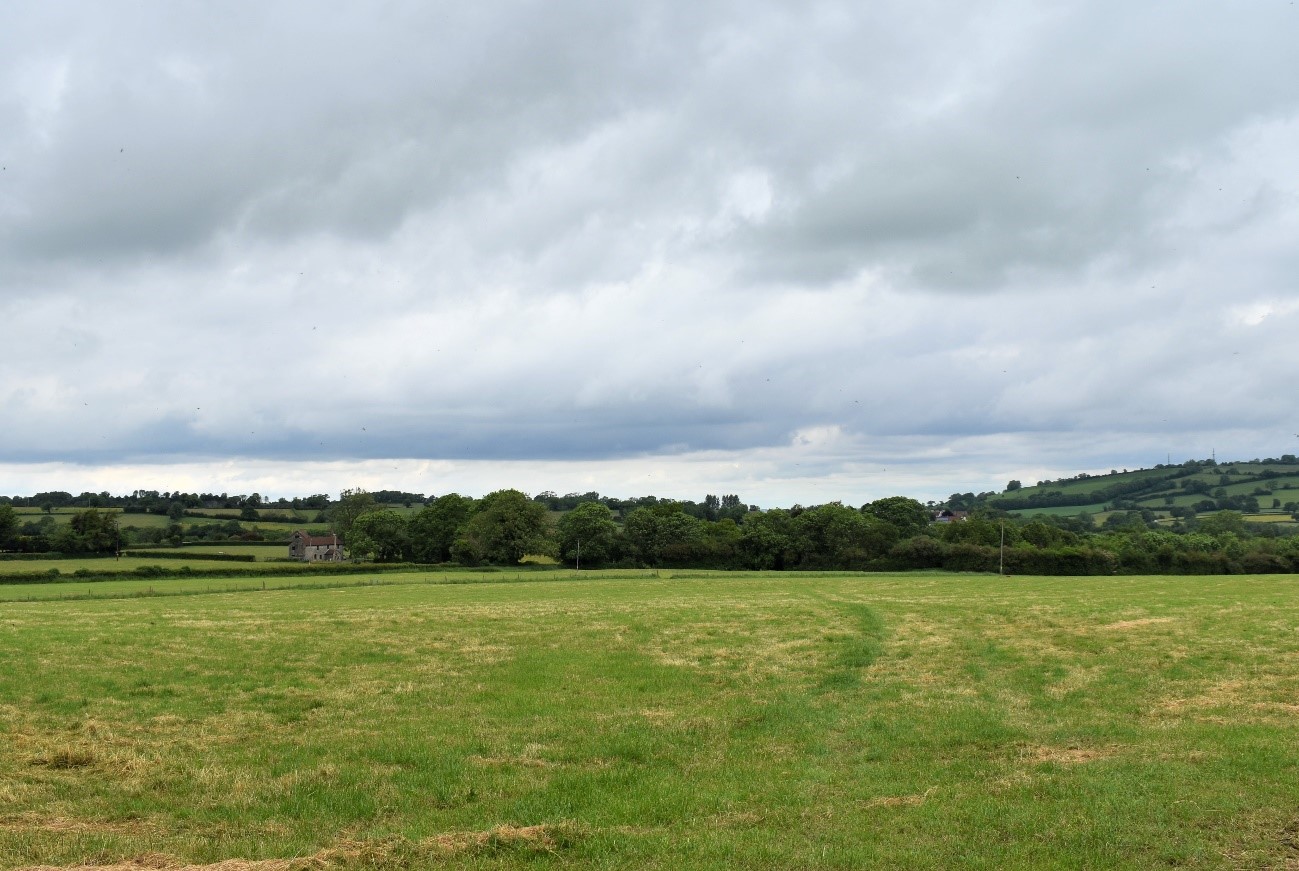
Existing conifer plantation in adjacent LCA E6 Cleeve Ridges and Combes could be extended on the Bradfield Down Plateau (LCA G1).
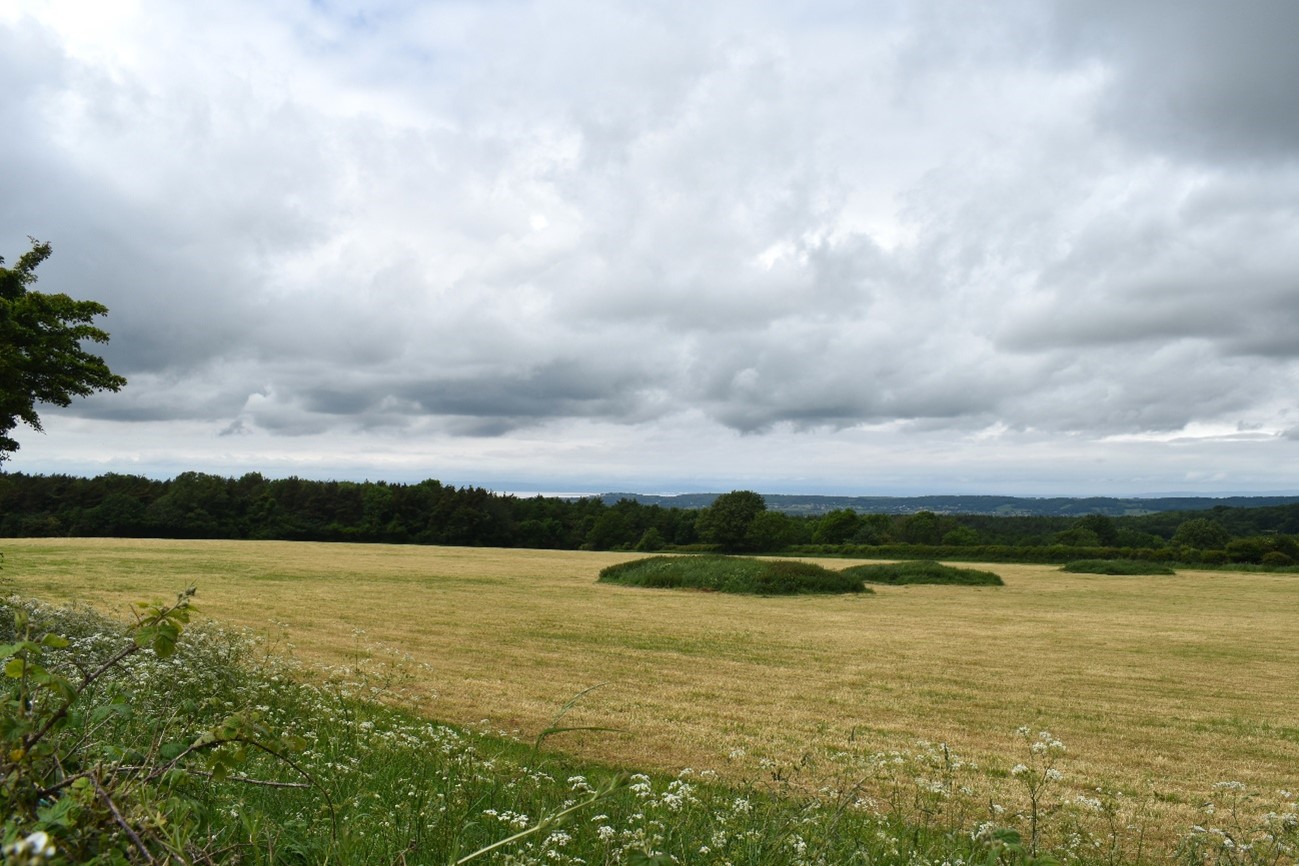
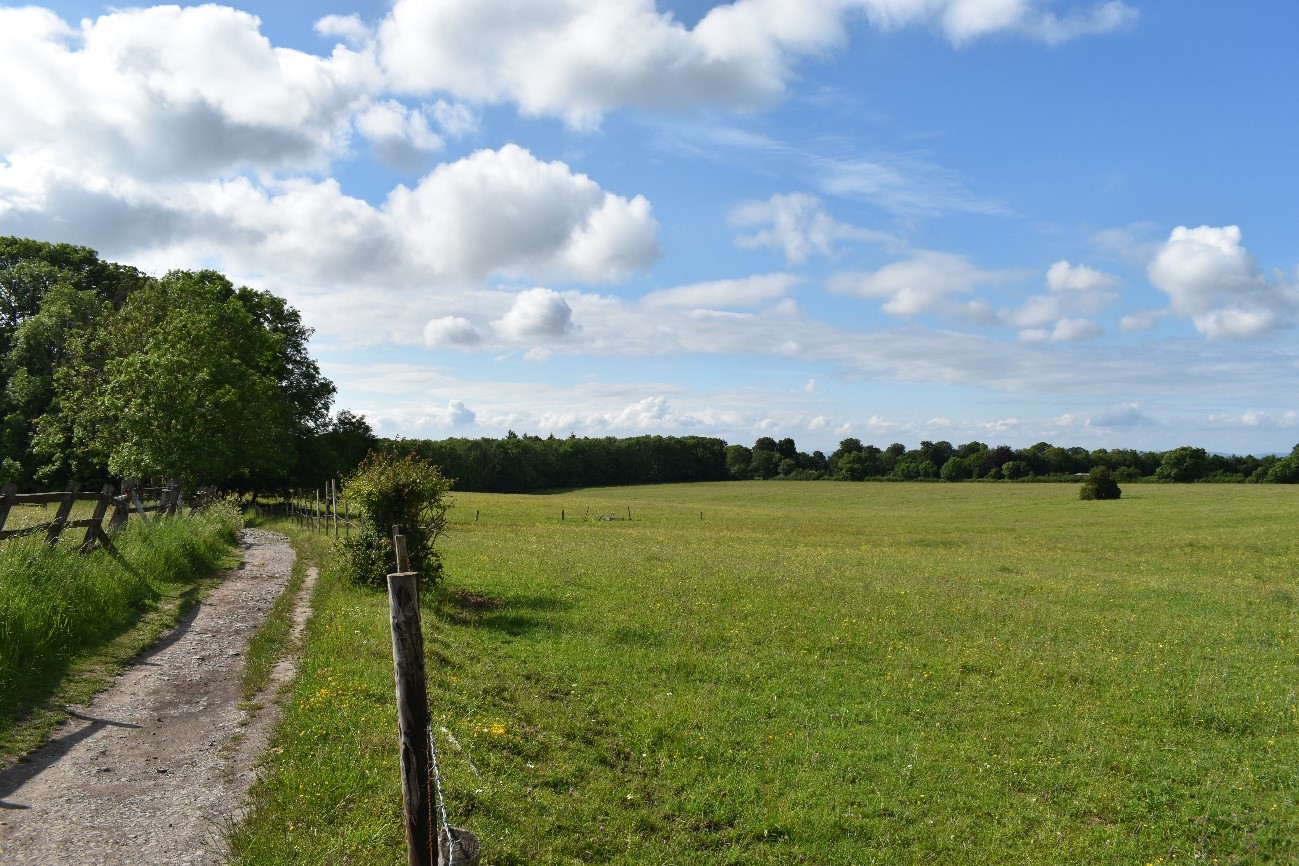
Pasture fields on the Failand Plateau near Abbots Leigh are enclosed by deciduous woodland which contributes to the wooded character of the LCA.
Land cover composition of LCT G
There was an issue displaying the chart. Please edit the chart in the admin area for more details.View and export full results.
Landscape sensitivities
Landform (including scale and pattern)
- The elevated, gently undulating plateau (lying between 100m AOD and 196m AOD) indicates lower sensitivity to new tree and woodland planting, which could accentuate the rolling landform.
Field and landcover pattern
- The pattern of large, rectilinear pasture fields on the plateau would be less sensitive to small-medium scale new woodland planting that could enhance the existing pattern of low-cut hedges. Areas of historic small-scale irregular fields found in rural parts of LCA G1 would be more sensitive new planting that could mask the existing landscape pattern.
- Existing woodland (including ancient woodland) and grassland habitats of national significance, including Local Nature Reserves, SAC- and SSSI-designated sites are particularly sensitive to woodland expansion as this could result in the loss of landscape and habitat diversity.
Historic landscape character
- The presence of Prehistoric enclosures, barrows and forts of national importance (several designated as Scheduled Monuments) indicate higher sensitivity, as new woodland would need to take into account the potential for physical harm to heritage assets and impacts on their setting.
- Historic estates (Registered Parks and Gardens) including Leigh Court, Ashton Court and Tyntesfield (all within LCA G2), would be highly sensitive to new woodland planting that would impact their setting or mask their distinctive features, such as historic houses and designed gardens.
- Remnant medieval field patterns in more rural areas of LCA G1 would be sensitive to medium and large-scale new woodland planting which would mask their historic character.
Visual character (including skylines)
- The wide views that are afforded from the plateau over surrounding lowland areas are sensitive to large-scale new woodland planting that could enclose views from open areas and from the edge of the plateau. Existing woodland cover in LCA G2 provides a sense of enclosure, and would be less sensitive to change from small-medium scale woodland planting.
- Skylines are marked by mature trees, small-scale overhead power lines, sports facilities (LCA G2) and airport infrastructure (LCA G1). New woodland planting could help to integrate these features into the landscape.
- Designed views from within the historic estates are particularly sensitive to new woodland planting that could screen or alter these views.
Perceptual and scenic qualities
- A landscape of intermittently pleasing character; existing woodlands and parkland in LCA G2 make an important contribution to the character of the landscape. Traffic on the A38, as well as activity at Bristol Airport, limits the sense of tranquillity.
- Urban land uses including Bristol Airport, golf courses and sports pitches have an urbanising influence and would be less sensitive to change. Small-medium scale woodland planting could help to integrate these features into the landscape.
Assessment of landscape sensitivity to tree and woodland planting
Summary
Small and small-medium sized woodland creation could generally be accommodated across the LCT. New woodland planting of this size could reinforce the existing field patterns, and complement and extend the existing pattern of small to medium sized woodland blocks and linear woodland belts, as well as enhancing the network of hedgerow trees. Areas of remnant medieval field patterns would be more sensitive to new woodland planting of this size. As set out in the Forest of Avon Plan, new small woodlands could consolidate the woodland corridor extending from Leigh Woods through to the more open landscape around Failand. New small-medium woodlands could also contribute to the creation a woodland corridor between Prior’s Wood and the southern fringe of the Gordano Valley and the wooded slopes of the Tickenham Ridge.
New medium-sized woodlands could provide opportunities to enhance woodland connectivity across the LCT and with adjacent landscapes, including the wooded combes and ridges. Medium sized woodland could also be used to integrate urban development (including sports facilities, roads, and infrastructure associated with Bristol Airport). New woodland planting of this size should be sensitively designed and sited so as not to enclose the long views available from the plateau, or compromise any designed views that can be experienced from historic estates.
There are existing large mixed woodlands within LCA G2, including at Leigh Woods and Ashton Court Estate. Large woodlands on the plateau frequently form part of a larger area of woodland, extending into the adjacent slope of LCA E5: Tickenham Ridges and Combes. There are currently no large size woodlands in LCA G1, however there is potential for new woodland planting of this scale to be established as an extension of existing woodland in the adjacent LCT E: Combes and Ridges, for example on Wrington Hill, adjacent to existing mixed woodland on Cleeve Hill and at Corporation Woods. New large-scale woodland should be sensitively designed and sited to avoid enclosing the long views available from the plateau, and should avoid masking the remnant medieval field patterns in LCA G1.
There are currently no commercial conifer plantations within this LCT. The introduction of this type of woodland would be inappropriate across most of this landscape, however there may be opportunities for coniferous plantation to be established on land to the west of Bristol Airport in LCA G1, where it could provide an extension to the existing large area of plantation woodland at Wrington Warren in adjacent LCA E6: Cleeve Ridge and Combes.
Any variations in landscape sensitivity
Although large-scale woodland already exists within LCA G2: Failand Settled Limestone Plateau, this LCA is more sensitive to additional large-scale woodland planting (including coniferous plantation) due to the presence of ancient woodland, nationally designated habitats, designed parkland landscapes associated with the historic estates, and the occasional attractive views that are afforded from the plateau over adjacent lowland landscapes (including the designed views within the estates).
LCA G1: Broadfield Down Settled Limestone Plateau may be more able to accommodate medium and large scale woodland planting (including conifer plantations) due to the relatively elevated, gently undulating landform, the large-scale field pattern, and limited sense of time depth. The remaining medieval field patterns, and open grassland at Felton Common should be protected.
| Criteria | Small size native woodlands and trees outside woodlands (≤5ha) | Small-medium size native woodlands (>5 to 15ha) | Medium size native or mixed woodlands (>15 to 30ha) | Large size native or mixed woodlands (>30ha) | Medium-large size conifer plantation (>15ha) |
| Landform (including scale and pattern) | Low | Low | Low-Moderate | Moderate | Moderate-High |
| Field and landcover pattern | Low | Low-Moderate | Moderate | Moderate | Moderate-High |
| Historic landscape character | Low | Low-Moderate | Moderate | High | High |
| Visual character (including skylines) | Low | Low-Moderate | Low-Moderate | Moderate | Moderate-High |
| Perceptual and scenic qualities | Low | Low | Moderate | Moderate | Moderate-High |
| Overall score | Low | Low | Low-Moderate | Moderate | Moderate-High |