Forest of Avon

6.3 LCT C: Settled Coastal Edge
The map below shows the location of LCAs with LCT C: Settled Coastal Edge - View map full screen
For help on how to use this map click here.
Landscape Character Type description
The Settled Coastal Edge LCT comprises two low-lying LCAs situated along the western seaward boundary of North Somerset, bounded by the Bristol Channel and coastal bay to the west.
Within North Somerset, LCT C comprises LCA C1: Weston Bay Settled Coastal Edge, and LCA C2: Portbury Settled Coastal Edge, as described in the North Somerset LCA (2018), and shown on the mapping provided.
Existing tree and woodland coverage
Woodland cover comprises 4.2% of the total landcover across the Settled Coastal Edge LCT, being notably higher in LCA C1. There are no ancient woodlands located within the LCT. Within LCA C1, woodland primarily comprises small clusters of broadleaved woodland occurring within parkland, golf courses, and along road corridors. LCA C2 features small groups and belts of broadleaved woodland around the M5 junction and coastal margin, with occasional small clusters and belts scattered throughout the industrial area. Trees outside woodlands make a significant contribution to the tree canopy cover within this relatively sparsely wooded landscape.
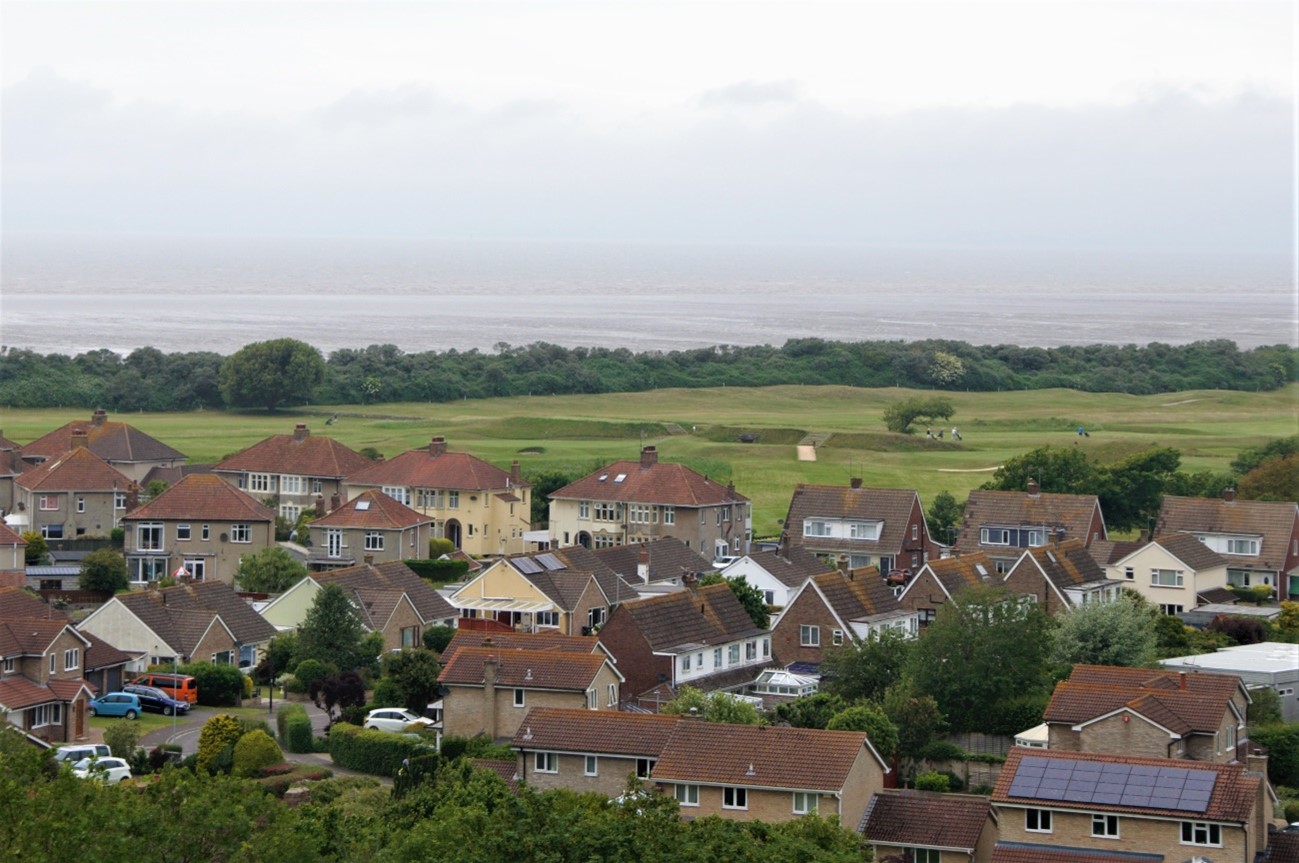
View north-west over Uphill, Golf course and coastal edge in LCA C1.
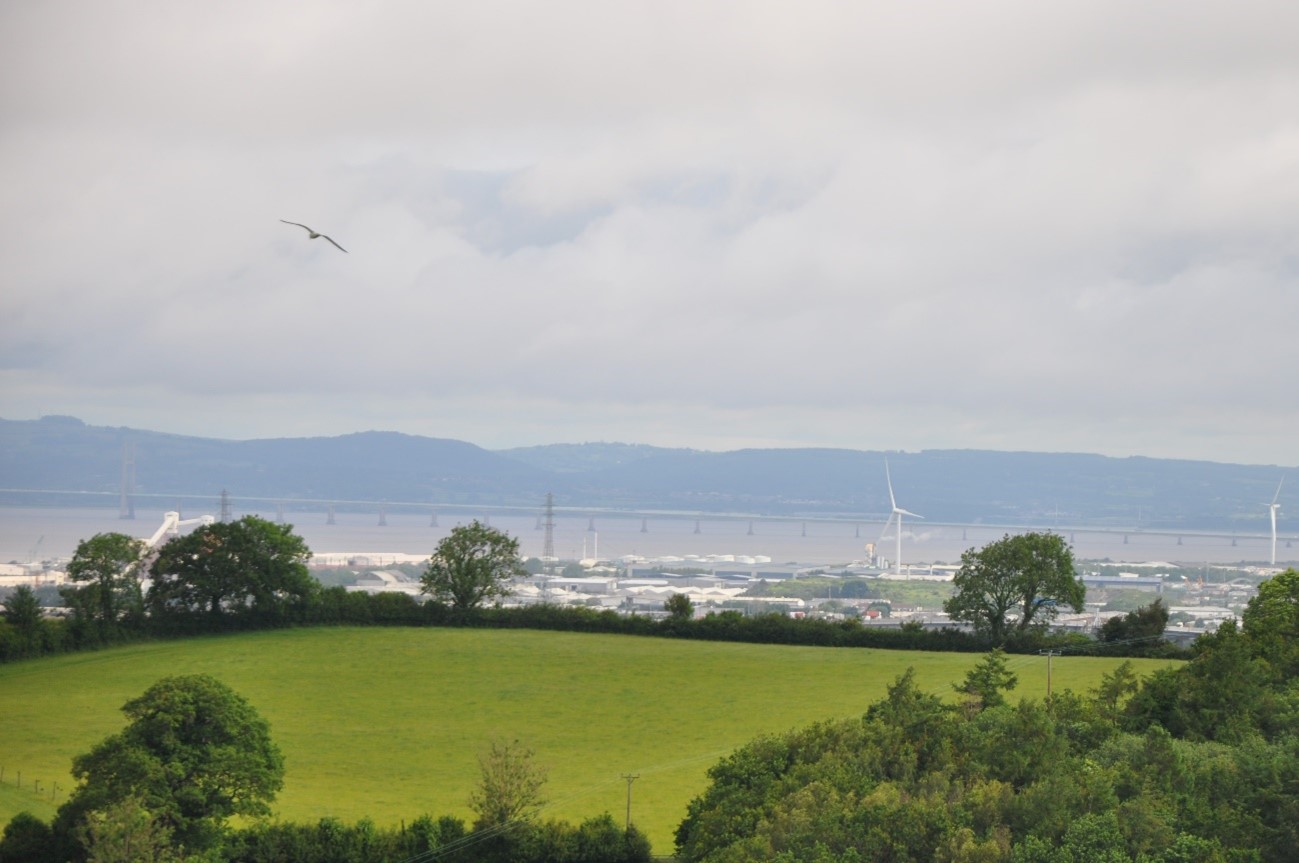
Views towards the industrial skyline of LCA C2 from LCA E4 (Portishead Ridges and Combes).
Land cover composition in LCT C
There was an issue displaying the chart. Please edit the chart in the admin area for more details.View and export full results.
Landscape sensitivities
Landform (including scale and pattern)
- The low-lying flat landform with little topographic variation, (ranging from 0-10 metres AOD) indicates lower sensitivity to new woodland planting.
- A landscape of contrasting scales, particularly in LCA C1 where the expansive, large-scale beach at Uphill contrasts with the remaining small-scale pastoral fields, mature trees and human-scale features further inland.
Field and landcover pattern
- Landcover is dominated by 20th century development including industrial units, transport corridors, and recreational facilities.
- Pockets of small-scale pasture associated with historic farmsteads in LCA C1 would be sensitive to new woodland planting which could mask the remaining traditional field patterns.
- Semi-natural habitats including internationally and nationally-designated coastal habitats associated with the Severn Estuary and shoreline, are of high nature conservation value and would be sensitive to new woodland planting that could result in loss of landscape and habitat diversity.
Historic landscape character
- Historic settlements with Conservation Areas at Uphill North and Great Weston extend into LCA C1 and would be sensitive to the impacts of woodland planting on their setting.
- Remnant areas of historic small-scale field patterns associated with coastal warths (LCA C1) would be sensitive to medium and large-scale woodland planting, which could mask the historic character.
Visual character (including skylines)
- Wide views are afforded from open parts of the settled coastal edge west towards the Bristol Channel and South Wales, and inland to the adjacent limestone ridges (LCT E) and landmark buildings on the ridge. The landscape is sensitive to planting that could interfere with these key visual relationships.
- Skylines are often marked by built features including the urban edge of Weston-super-Mare (LCA C1) and large-scale industrial, buildings (LCA C2). New woodland planting could help to integrate these features into the landscape.
- Views from the England Coast Path National Trail are sensitive to new woodland planting that could screen or alter views from the trail, however new woodland planting could enhance views (including screening intrusive man-made elements) if appropriately located.
Perceptual and scenic qualities
- A coastal landscape manifested in wide sea views, docks and boatyards. The remaining pastoral fields, small woodlands and pattern of rhynes and ditches (LCA C2) make an important contribution to the character of the landscape.
- Modern development dominates the LCT, including industrial units and infrastructure associated with Royal Portbury Dock in LCA C2 and urban land uses including golf courses, playing fields and the urban edge of Weston Super Mare in LCA C1, have an urbanising influence and would be less sensitive to change.
Assessment of landscape sensitivity to tree and woodland planting
Summary
Small native woodland creation could generally be accommodated across the LCT. New woodland planting of this scale could complement and extend the existing pattern of small-sized woodland blocks and shelterbelts, linking to hedgerow networks. Furthermore, small-scale tree planting could screen development and break up significant areas of hard landscaping associated with Royal Portbury Dock. Remnant pastoral landscapes linked to historic farmsteads (LCA C1) and coastal warths would be more sensitive to woodland planting of any size. Coastal habitats, including salt marshes, are also highly sensitive to woodland planting. New woodland planting of this size should be sensitively designed and sited so as not to enclose the long views available from LCT or compromise the designed views that can be experienced from parkland or promoted routes.
There are currently no medium-size or large size woodlands in the LCT. The introduction of this type of woodland would be incongruous with the open character of the coastal landscape and mask the mosaic of grassland and coastal habitats. Opportunities for woodland planting of this size are restricted by the limited available land area.
There are currently no commercial conifer plantations within this LCT. The introduction of this type of woodland would be inappropriate across most of this landscape and would significantly alter the distinctive characteristics and qualities of the landscape. Opportunities for woodland planting of this size are restricted by the limited available land area.
Any variations in landscape sensitivity
LCA C1: Weston Bay Settled Coast is more sensitive to medium and large-scale woodland planting (including coniferous plantations) due to its open character, presence of nationally designated habitats, and the rural setting it provides to the Conservation Areas of Uphill. The inland part of the LCA, characterised by small-scale pasture fields and existing woodland, would be less sensitive to small-scale woodland planting including hedgerow trees and linear woodland which could enhance habitat connectivity and reinforce the landscape structure.
LCA C2: Portbury Settled Coastal Edge exhibits lower sensitivity to new woodland planting (up to 30ha) due to the extensive industrial development. The limited extent of remaining undeveloped land restricts the LCA’s capacity to accommodate new large-scale woodland.
| Criteria | Small size native woodlands and trees outside woodlands (≤5ha) | Small-medium size native woodlands (>5 to 15ha) | Medium size native or mixed woodlands (>15 to 30ha) | Large size native or mixed woodlands (>30ha) | Medium-large size conifer plantation (>15ha) |
| Landform (including scale and pattern) | Low | Low-Moderate | Moderate-High | High | High |
| Field and landcover pattern | Low | Moderate | Moderate-High | High | High |
| Historic landscape character | Low | Low-Moderate | Moderate-High | High | High |
| Visual character (including skylines) | Low | Low-Moderate | Moderate-High | High | High |
| Perceptual and scenic qualities | Low | Low-Moderate | Moderate-High | High | High |
| Overall score | Low | Moderate | Moderate-High | High | High |