Forest of Avon

6.5 LCT 5: Enclosed Valleys
The map below shows the location of LCAs within LCT 5: Enclosed Valleys. - View map full screen
For help on how to use this map click here.
Landscape Character Type description
The LCT comprises two river valleys following the River Boyd (LCA 11) and northern valley side of the River Avon (LCA 16), which converge in the south of the district. It comprises steep ridges and valley sides, with broad, shallow areas along the valley floor. The LCAs are described further in the South Gloucestershire LCA SPD (draft for adoption 2024), and shown on the mapping provided.
The LCT is covered by several South Gloucestershire Strategic Green Infrastructure Corridors, predominantly related to the river valleys including Corridor F: Avon Valley, Corridor H: Boyd Valley, Corridor E: Cotswold Scarp and Ashwicke Ridges, and a small part of Corridor D: Westerleigh Vale/Oldland Ridge/East Fringe. Corridors F, H, E and D form part of a wider strategic GI network that has been identified to protect designated landscape, heritage and ecological sites and features, well as connecting green and blue infrastructure for the benefit of both people and nature. Further detail is provided in the South Gloucestershire GI Corridor Mapping report (draft for adoption 2024).
Existing tree and woodland coverage
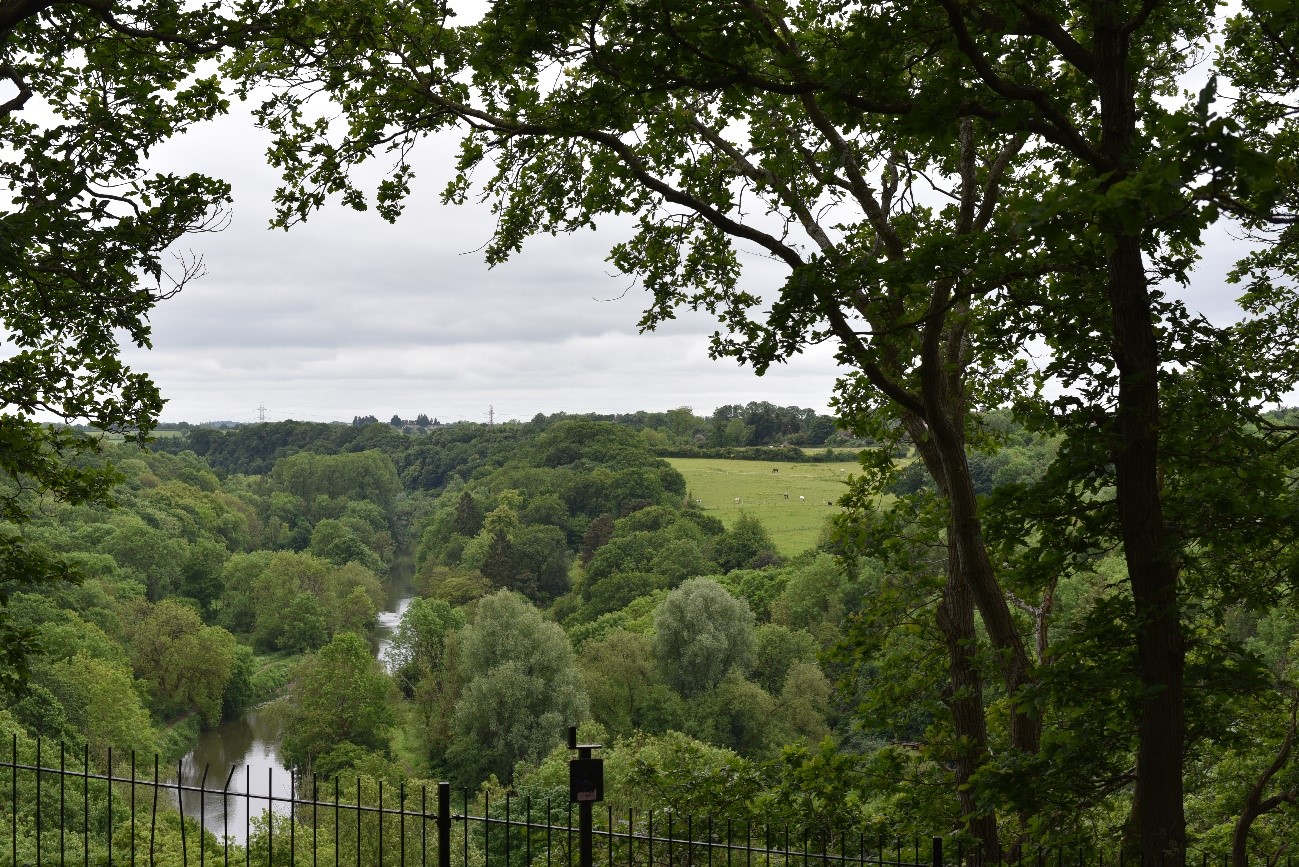
Woodland cover comprises 8.7% of the total landcover across the Enclosed Valleys LCT, one of the highest in the district. Woodland cover is notably higher in the Avon Valley (LCA 16), predominantly comprised of dense linear broadleaved woodland concentrated along the steep valley sides of the River Avon. Large areas of ancient woodland accounts for 2.4% of total landcover in the LCT. The woodland composition of the Golden Valley (LCA 11) includes riparian woodland, occasional copses, small woodland blocks, and mature trees. This vegetation framework is weaker in the north, with little tree cover on the upper slopes of the Oldland Ridge, and hedgerow removal resulting in larger, more open field patterns.
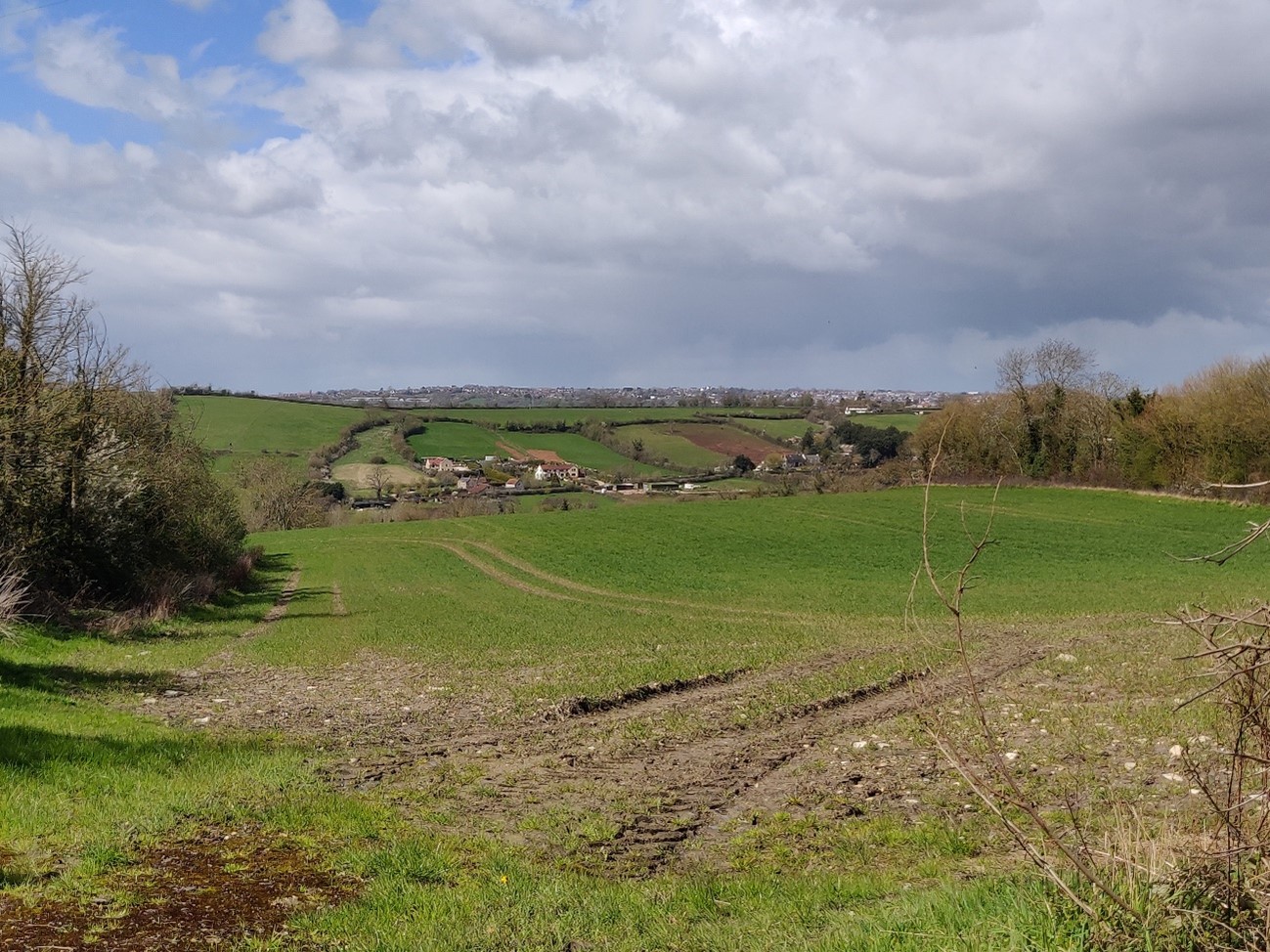
The agricultural landscape of the Golden Valley (LCA 11) is relatively open, with canopy cover limited to occasional hedgerow trees.
The densely wooded Avon Valley (LCA 16) near Hanham.
Landscape sensitivities
Landform (including scale and pattern)
- This LCT is formed of two distinctive valley landforms; the Golden Valley following the course of the River Boyd (LCA 11), and the Avon River Valley in LCA 16. Both comprise areas of steep, narrow valley sides and broad, open floodplains.
- The LCT would be sensitive to larger-scale woodland expansion which could enclose the distinctively open character of the floodplain. However, small-scale woodland planting could enhance the existing pattern of riparian woodland in the valley bottom, particularly in LCA 11.
- Areas of localised elevation including the Oldland Ridge and Hanham Hills form locally-distinctive features. New small-scale woodland planting aligned with the existing contours could enhance these landforms as important landscape features.
Field and landcover pattern
- The pattern of small-scale fields enclosed by hedgerows in the south of the Golden Valley (LCA 11) would be sensitive to woodland planting that could mask the existing field pattern.
- Medium-large scale fields with fewer hedgerows in the north of the Golden Valley (LCA 11) would be less sensitive to woodland expansion which could enhance habitat connectivity across the agricultural landscape.
- Semi-natural grassland habitats include floodplain grazing marsh and lowland meadows in the Avon Valley (LCA 16), and calcareous grassland on higher ground. Many are Local Wildlife Sites. These habitats would be sensitive to woodland expansion, which could result in the loss of landscape and habitat diversity.
- Extensive areas of ancient woodland, including SSSIs at Bickley Wood and Cleeve Wood, would be vulnerable to inappropriately located new woodland planting.
- Several fragments of traditional orchard remain across the LCT. New small-scale planting could enhance and reinstate orchards as an important cultural and ecological feature of the landscape, which historically would have been more prevalent across the LCT.
Historic landscape character
- Remnant parkland landscapes and designed gardens at Wick Court, Tracy Park and Hanham Court would be sensitive to new woodland planting that could mask or detract from the setting or integrity of the historic landscapes, including designed views from the estates.
- Historic settlements designated as conservation areas at Hanham Abbots, Bitton, and Upton Cheyney are sensitive to new woodland planting that could impact their setting and integrity, including views to and from the settlements.
- Historic assets including a prehistoric barrow and medieval enclosure (both Scheduled Monuments) are sensitive to new woodland planting that could cause physical harm or impact their setting.
Visual character (including skylines)
- On the floodplain, views along the valley floor are often contained by a dense network of trees and hedgerows following watercourses and field boundaries. The LCT would have a lower sensitivity to woodland planting that followed a similar pattern and scale of planting within these areas.
- The historic settlements of Bitton and Upton Cheyney (including local landmarks such as St Mary’s Church tower) are prominent in views across the Avon valley Floodplain. The landscape would be sensitive to new woodland planting that screens key views to these settlements.
- Panoramic views of the Avon Valley, Ashwicke Ridges, Oldland Ridge and towards the Cotswolds National Landscape would be sensitive to woodland planting that encloses these long-distance views.
- Hanham Hills, the Oldland Ridge and the lower slopes of Ashwicke Ridges are all identified as Visually Important Hillsides (VIH) and afford scenic views across the LCT. Views from these hillsides would be sensitive to new woodland that could enclose these key views.
- Scenic views from public rights of way and promoted routes including the Bristol and Bath railway path, River Avon Trail, and Monarch’s Way would be sensitive to woodland expansion that could enclose views or diminish their significance.
Perceptual and scenic qualities
- A rural landscape with an attractive combination of features including scattered farmsteads, limited modern development, and a sense of enclosure and tranquillity. Existing woodland makes an important contribution to the perceived rural character and creates a sense of isolation in places.
- The eastern edge of the Golden Valley (LCA 11) falls within the Cotswolds National Landscape and would be sensitive to new woodland planting that could detract from the special qualities of the designated landscape, including the historic villages built in local stone, and views to and from the escarpment.
- Dense woodland cover on the valley sides of the Avon Valley (LCA 16) creates an enclosed character along the river valley to the north-west. The visibility of modern settlement along the northern boundary detracts from this rural character. New woodland planting could screen modern development and enhance the enclosed wooded character along the River Avon.
Assessment of landscape sensitivity to tree and woodland planting
Summary
There is low sensitivity to small and small-medium woodland creation across the LCT. New woodlands of this size could increase habitat connectivity and reinforce the existing pattern of tree cover along watercourses, field boundaries, roads and railway line, small woodland blocks, and traditional orchards, without adversely impacting the landscape character. There would be slightly higher sensitivity to small-medium woodland planting in the Golden Valley (LCA 11), since there are no existing woodlands larger than 7ha. The small-scale, intricate landcover pattern in the south-east of LCA 11 would be particularly sensitive. In contrast, small-medium woodlands already exist in the Avon Valley (LCA 16). Further planting of this size could help to buffer existing ancient woodland and designated habitat sites, as set out in the Forest of Avon Plan Tree and Woodland Strategy.
There are no existing medium-sized woodlands within the Golden Valley (LCA 11), however this size of woodland could be accommodated within a linear structure following existing riparian vegetation along the River Boyd corridor (and tributary valleys) in the Golden Valley (LCA 11). The Avon Valley (LCA 16) contains medium-sized woodland along the river corridor, and new woodlands of this scale could screen modern development across the river, enhance habitat connectivity and create a more cohesive landscape character across the LCA.
Landscape sensitivity to large sized woodland planting varies between the Golden Valley (LCA 11) and Avon Valley (LCA 16). The Golden Valley does not contain existing woodland of this scale, and the introduction of new ‘stand-alone’ large woodlands would be discordant with the existing pattern of tree cover and landscape character. However, there may be opportunity to expand existing woodlands along the valley sides, ensuring that the open character of the flood plain is retained. The presence of existing large-scale woodland along the River Avon may indicate lower sensitivity to further large-scale woodland planting within the Avon Valley. Large-scale woodland planting should consider existing priority habitats along the river corridor including floodplain grazing marsh and lowland meadows, as well as key views experienced within and from the landscape.
There are currently no commercial conifer plantations within this LCT. The introduction of this type and size of woodland would be discordant with the existing landscape character.
Any variations in landscape sensitivity
LCA 11: Golden Valley would be more sensitive to woodland planting (including commercial conifer plantations) due to its location within, and strong intervisibility with, the Cotswolds National Landscape. New medium and large-scale woodland planting could mask or diminish the special qualities of the National Landscape, including the historic villages built in local stone, and important views to and from the escarpment, if not appropriately designed and sited.
| Criteria | Small size native woodlands and trees outside woodlands (≤5ha) | Small-medium size native woodlands (>5 to 15ha) | Medium size native or mixed woodlands (>15 to 30ha) | Large size native or mixed woodlands (>30ha) | Medium-large size conifer plantation (>15ha) |
| Landform (including scale and pattern) | Low | Moderate | Moderate | High | High |
| Field and landcover pattern | Low | Low-Moderate | Moderate | High | High |
| Historic landscape character | Low-Moderate |
Low-Moderate |
Moderate | Moderate-High | High |
| Visual character (including skylines) | Low | Low-Moderate | Moderate-High | Moderate-High | High |
| Perceptual and scenic qualities | Low-Moderate | Low-Moderate | Moderate | Moderate | Moderate-High |
| Overall score | Low | Low-Moderate | Moderate | Moderate-High | High |
Tree and Woodland planting guidance
- New woodland planting should be designed to align with existing contours to maintain the existing open character of the valley floor, positioning new woodland on the sloping landform along the valley sides.
- Restore and enhance hedgerow trees where they have been lost or degraded using native species to strengthen the landscape structure and improve biodiversity value.
- Avoid siting woodland across multiple fields which would mask the small-scale historic field patterns, where these are identified as post-medieval in origin.
- Protect and manage the riparian habitats of the River Boyd and Avon (and their tributaries) and encourage new riparian planting using native species such as willow. Seek opportunities to enhance connectivity with adjacent habitats, including the areas of floodplain grazing marsh associated with the River Avon.
- Buffer and protect ancient woodlands and SSSI sites using native species, to secure the landscape structure and habitat value, in line with the aims of the Forest of Avon Plan.
- Ensure new woodland planting does not damage existing calcareous grassland habitats on the valley sides, including locally-designated sites.
- Promote small-scale planting including hedgerow trees, linear belts, and riparian woodland to create wildlife corridors and enhance ecological connectivity.
- Manage and restore parkland associated with Tracy Park to reinforce the historic parkland setting, and enhance the wood pasture, mature field trees, woodland, and hedgerow habitats, in line with guidance in the Forest of Avon Plan.
- Preserve and enhance the landscape setting of conservation areas, together with key views to and from key features, including listed buildings. Ensure new woodland planting does not detract from their landscape setting, or enclose key views to and from the settlements.
- Encourage new small-scale planting around the settlement edges of Hanham Abbots, Willsbridge, and Wick, to help integrate new residential development into the landscape.
- Ensure key views to and from Visually Important Hillsides (including Hanham Hills, the Oldland Ridge, and Ashwicke Ridges) are not screened by new woodland planting.
- Ensure new woodland planting does not screen key views from popular public rights of way including the Bristol and Bath Railway Path and the River Avon Trail. Manage recreational pressures on the riverbanks and wooded slopes to maintain the tranquil, rural character.
- New woodland planting within the Cotswolds National Landscape or its setting should be designed to complement and conserve the special qualities of the landscape, reflecting guidance set out in the Cotswolds AONB Landscape Strategy.
- Refer to LCA-specific guidance as set out in the Forest of Avon Plan.
- Any new planting should follow principles of good design, as set out in the UK Forestry Standard.